The Klaviyo Flow Build Order: What to Set Up First, Second, and Last
Quick summary
- Building flows in the wrong order is a common reason a 10-flow Klaviyo account underperforms a 3-flow account that was sequenced correctly
- Flow performance compounds through the account, later flows depend on the segmentation logic and data the earlier ones establish
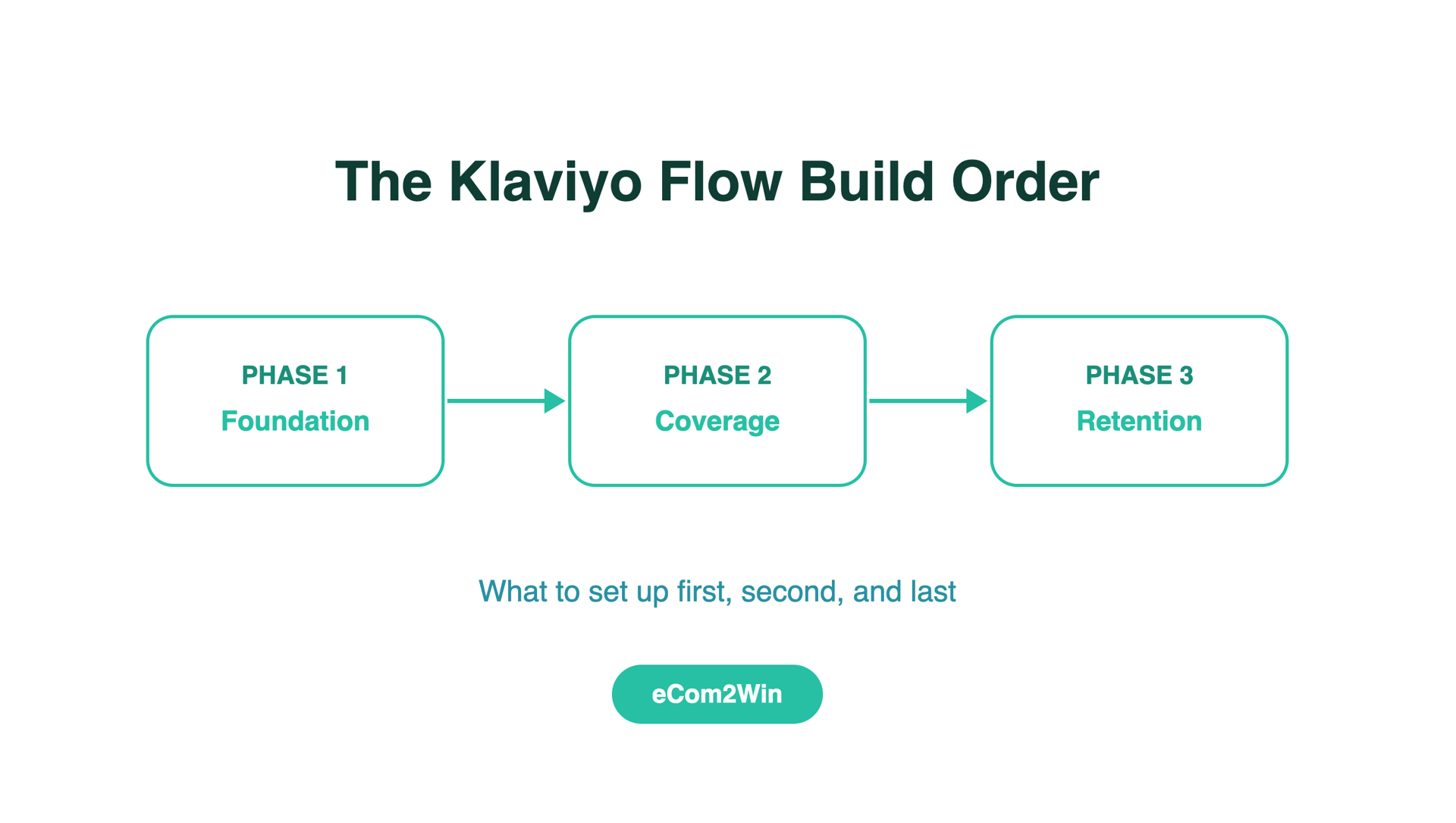
- Three phases: Foundation, Coverage, Retention
- Knowing when an account is actually ready to move to the next phase is the harder (and more valuable) part
Most Klaviyo accounts don't get built in a deliberate order. A brand either turns on every flow in the template library in the first week, or works through a checklist copied from a blog post, top to bottom, regardless of what the account is actually ready for. Neither approach accounts for the fact that some flows depend on data and segmentation logic that only exists once an earlier flow has been running.
This is the order we build in, and why each phase has to be in place before the next one starts paying off.
Phase 1: Foundation — Welcome Series, Abandoned Cart, Abandoned Checkout
These come first for two reasons. First, they capture the highest-intent moments a subscriber gives you: someone who just opted in, and someone who was one step from paying. Second, and less obvious, this is where the core segmentation logic for the rest of the account gets established, first-time vs. returning buyer, discount-sensitive vs. full-price, popup signup vs. checkout signup. Every later flow reuses these splits.
Treat abandoned cart and abandoned checkout as two separate flows here, not one. Cart triggers when someone adds a product and leaves. Checkout triggers further along, once payment or shipping details are entered. Checkout abandoners carry more intent, and building them as separate flows from day one means you're not retrofitting the split later.
Getting this phase right isn't just about turning the flows on, it's the segmentation logic underneath them that determines whether they perform. That's usually the part that separates a template install from an account that actually converts.
Phase 2: Coverage — Browse Abandonment, Post-Purchase
Once the foundation flows are proven, the next priority is widening the net. Browse abandonment is the flow most often missing entirely, and it captures an audience that's larger than cart abandoners but hasn't shown up anywhere else in the account yet.
Post-purchase is where a lot of accounts quietly lose the plot, built once and sent identically to every customer, regardless of whether they're on their first order or their tenth. Getting this phase right has less to do with the emails themselves and more to do with the account structure feeding them.
Phase 3: Retention and Niche-Intent — Back-in-Stock, Win-Back, VIP/Loyalty
These flows carry some of the highest revenue-per-recipient numbers in an account, but they only work once there's a real base of purchase history and repeat customers behind them. Build them too early and you get a nicely designed flow that almost nobody qualifies to enter. The judgment calls here, how "lapsed" should actually be defined for a given brand, what a VIP threshold should look like for a given customer base, are where a lot of accounts either underperform or overcomplicate things.
The part that's easy to underestimate
None of these three phases are hard to describe. What's harder is knowing, for a specific brand, whether an account is actually ready to move to the next one, whether the segmentation underneath a flow is real or just defined on paper, whether there's enough data yet to trust a threshold, whether an underperforming flow is broken or just built too early. That diagnostic work is most of what separates accounts that compound in performance over time from ones that have every flow "live" and still can't explain why growth has stalled.
Frequently asked questions
Not sure which phase your account is actually in?
Book a free audit call and we'll show you what's live, what's missing, and what to build next.
Book Your Free Strategy Call