BFCM 2026: Early Trends & What to Start Planning Now
Black Friday Cyber Monday used to be a four-day scramble. That's not what it is anymore, and treating it that way is exactly why so many brands leave revenue on the table.
BFCM isn't a weekend. It's a season.
Klaviyo's latest research, surveying more than 7,000 shoppers, found that while 40% of consumers plan to shop specifically during BFCM, nearly a quarter plan to shop the sales earlier than that. Waiting for the weekend to matter means missing a real chunk of the buyers who've already decided to act.
The timing data backs this up even more directly. Klaviyo's own analysis of 80,000 global brands found that companies who started sending BFCM campaigns in October and held a steady weekly cadence were roughly three times more likely to be top performers than brands who waited.
If October is already "late" by that measure, August is when the actual groundwork, strategy, list health, segmentation, needs to start. Not the campaigns themselves yet, the foundation underneath them.
The channel mix is shifting away from paid social
During BFCM 2025, Meta's share of ad spend dropped to 67.6%, while TikTok grew more than 23% and AppLovin surged over 36% (Triple Whale). That's a real crack in a platform duopoly that's held steady for years.
What this means for planning: owned channels, email, SMS, WhatsApp, matter more this year, not less. When you're renting attention from one platform and that platform's economics shift under you, the audience you've actually built yourself is the one thing that doesn't move.
Omnichannel is the baseline now, not the differentiator
Mobile commerce is expected to make up 44% of total ecommerce sales this BFCM, and shoppers are meaningfully more likely to download a brand's app and opt into push notifications in Q4 than at any other point in the year.
Buy Now Pay Later drove over $1 billion in online spend on Cyber Monday alone last year. Flexible payment at checkout isn't a nice-to-have anymore, it's an expected feature, the same way free shipping became one a few years back.
AI is changing how people shop, not just how brands sell
More than half of shoppers now say they plan to use AI to shop smarter this holiday season, and over three-quarters of omnichannel shoppers move across three to four channels before buying. When your customer is running their own AI-assisted comparison shopping in the background, the brands that respond fastest and personalize best are the ones that win the moment.
Trust is beating pure discounting
About 62% of consumers say they prioritize brands they already know and trust for BFCM purchases, and nearly half actively seek out brands whose values they share, even with cost-of-living pressure still very real for most households.
This favors exactly the kind of brand that's built a real retention and email relationship over the year, not just the one running the deepest discount that weekend.
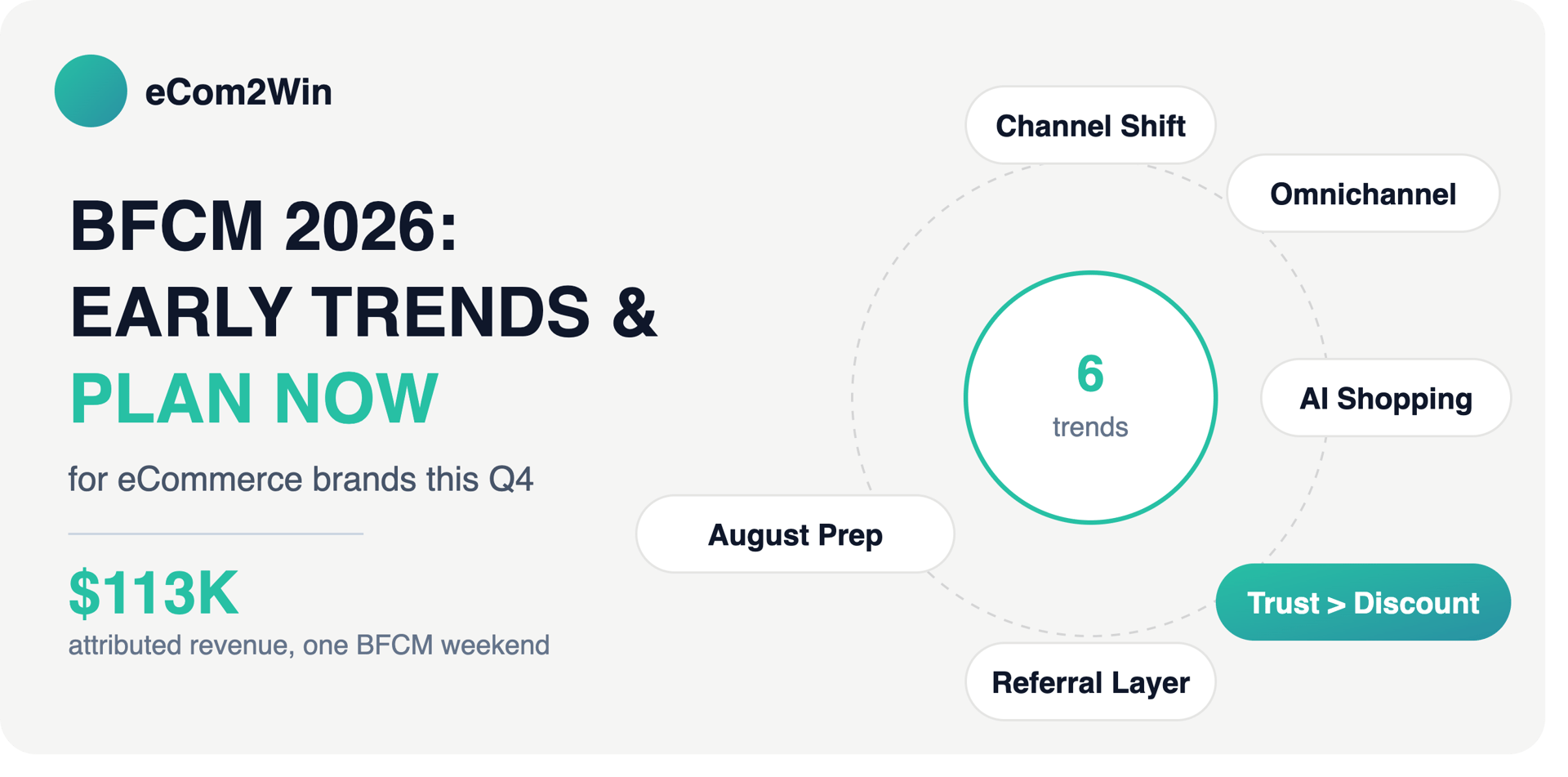
We've seen this play out directly. We migrated one of our clients to Omnisend just before Black Friday, a genuinely risky, late-window move. The result: $113,000 in attributed email revenue that weekend alone, 53% of the brand's total store revenue for the period. The lesson wasn't really about timing. It was that the underlying strategy and segmentation work mattered more than how many weeks of runway they had. Read the full story on Omnisend →
What's actually working beyond email: the referral layer
Talkable's analysis of the last two BFCM seasons found that dedicated, purpose-built referral campaigns grew 460% during the event, compared to 283% for always-on referral programs left running in the background. A referral program that just sits there year-round doesn't perform the same as one built specifically for the moment.
Two other findings worth knowing: Cyber Monday generated nearly as much referral revenue as Black Friday in 2025 ($681.7K vs. $700.1K), so treating Monday as an afterthought is a real miss. And the single biggest mistake brands made was stripping out the friend's discount to protect margin, which alone dropped conversion by nearly 14 percentage points. The customer isn't just sharing a code, they're vouching for you to someone they know. Cutting the friend's benefit breaks the mechanism that makes referral work.
The macro backdrop
Holiday ecommerce sales are forecast at $305–310.7 billion this year, 7-9% growth, with the holiday season now accounting for roughly a quarter of all annual online shopping. The stakes for getting this right keep climbing every year, not leveling off.
What to actually do in August
None of this requires a finished campaign yet. It requires three things, done properly, before the season gets loud:
- A list health check. Know your suppression rates, bounce rates, and engagement tiers now, before peak season noise makes everything harder to read.
- A segmentation audit. Your best customers deserve early access, your at-risk customers deserve a different message entirely. Neither works if the segments aren't built and validated yet.
- A flow review. The flows that will fire during BFCM need to be checked now, not discovered broken on Black Friday morning.
That's the real starting line. We'll get into exactly what a proper flow review looks like in two weeks.
Frequently asked questions
Not sure if your store is ready for BFCM 2026?
Book a free audit call and we'll show you where the gaps are before peak season hits.
Book Your Free Strategy Call